 Reviews


 Proudly American


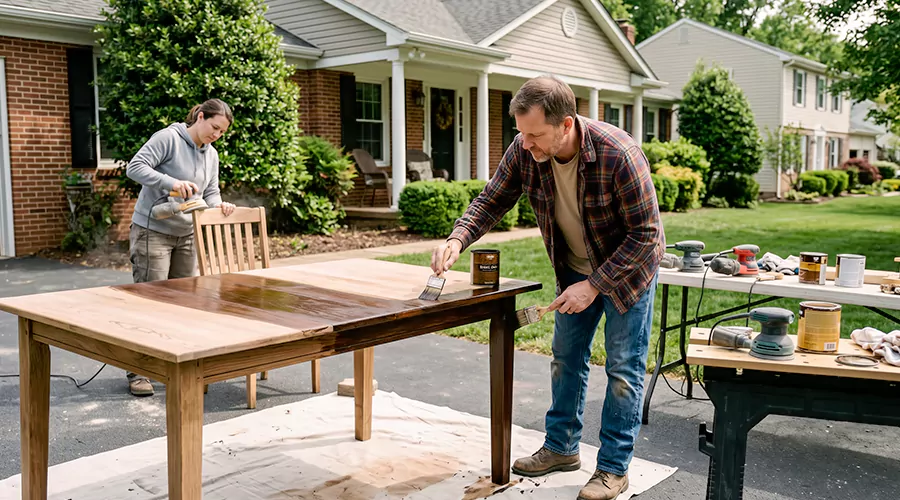
Wood furniture should be refinished when the protective coating has failed across noticeable areas but the wood underneath is still solid and stable. Mold damage cleanup may be needed when moisture has caused mold growth on or around the furniture. Six common warning signs can help separate normal wear from a finish that has reached the point where cleaning or a small touch-up will no longer solve the problem.
Refinishing is not right for every old table or cabinet. Dirty finish may need only cleaning, while loose joints or broken veneer should be repaired first.
What Signs Mean Furniture is Ready for Refinishing?
Furniture is usually ready for refinishing when damage extends beyond isolated marks and affects the protective finish across a larger area. The strongest signs are exposed wood or peeling coating. Deep scratches also matter when they cut through the finish instead of remaining on top.
Look for these warning signs:
- Bare wood shows through in high-contact areas.
- The finish flakes or peels.
- Deep scratches cut through the coating.
- Cloudy patches remain after cleaning.
- Water marks have changed the finish.
- Old coating looks uneven across large sections.
- Previous touch-ups no longer blend.
- The surface stays rough after normal cleaning.
Refinishing wood furniture makes the most sense when these problems affect the finish rather than the structure.
When is Cleaning or a Touch-up Enough?
Cleaning or a small touch-up is usually enough when the coating remains intact and damage is limited to light dirt or a few shallow marks. Full stripping removes more original material, so it should not be the first response to every dull or scratched surface.
| Furniture Condition | Better Starting Point |
|---|---|
| Dirt or wax buildup | Careful cleaning |
| A few light scratches | Local touch-up |
| Small worn edge | Local finish repair |
| Widespread peeling | Full refinishing |
| Loose joints | Structural repair first |
| Valuable original finish | Preservation assessment |
Refinishing furniture simply because it looks old can remove a finish that still has useful life. Age alone is not a reason to strip a piece.
When Does Surface Damage Require a Full Refinish?
A full refinish becomes more practical when the old coating can no longer protect the wood or when damage is spread too widely for spot repair. Once several areas have worn through to bare wood, patching each location can create an uneven appearance.
Wood refinishing may be appropriate when:
- The coating has failed on the tabletop.
- Several edges have exposed wood.
- Finish cracks cover broad sections.
- Old repairs no longer blend.
- Staining remains after the piece dries.
Deep gouges still need separate repair. A new finish can improve appearance but cannot rebuild missing wood.
Should Water-Damaged Furniture Be Refinished?
Water-damaged furniture should be refinished only after the wood has dried and reached a stable shape. Moisture can swell panels or loosen veneer. Sanding too early can leave the surface uneven after the piece continues to dry.
Check for swollen panels or lifted veneer. Also look for open joints and soft wood. A stable solid-wood piece may still be a good candidate after drying, while decayed sections need repair before finishing.
When Should You Avoid Refinishing?
Refinishing wood furniture should be delayed when the piece may have a valuable original finish or is too fragile for stripping. Thin veneer can also be damaged by aggressive sanding.
Avoid a full refinish when:
- The furniture may be a valuable antique.
- Decorative inlays are lifting.
- Veneer is extremely thin.
- Structural joints are failing.
- Old painted surfaces have not been checked for lead.
- Moisture is still present.
Wood restoration may preserve more original material than a complete strip-and-refinish approach.
What Can You Check Before Deciding?
A small finish test can show whether the problem is mainly dirt or true coating failure. Clean a hidden area with a method suited to the existing finish, then let it dry and compare it with the surrounding surface under good light.
Use this check:
- Choose an inconspicuous section.
- Remove surface dust gently.
- Clean the test area.
- Let it dry completely.
- Check for cloudiness or cracking.
- Look for exposed wood.
If cleaning restores the appearance, a full refinish may be unnecessary.
Is Refinishing Better Than Replacing the Furniture?
Refinishing is often the better choice when the frame is stable and most of the original wood remains usable. Replacement makes more sense when structural damage is severe or engineered material has swollen beyond repair after prolonged water exposure.
| Condition | Refinish | Replace or Rebuild |
|---|---|---|
| Sound solid wood | Often | Rarely |
| Worn finish | Yes | No |
| Minor veneer damage | Often | Sometimes |
| Severe swelling | Rarely | Often |
| Extensive decay | No | Often |
The decision should follow the condition of the underlying material rather than appearance alone.
When Should You Call a Professional?
Professional assessment is useful when the furniture has significant value or surface work could remove original material. Complex veneer and old finishes also need extra care.
Consider professional help when:
- The piece may be collectible.
- Large veneer sections are lifting.
- Decorative inlays are damaged.
- Structural joints have separated.
- Water caused severe warping.
- The existing finish may be historically important.
How Can You Delay the Next Refinish?
Regular care can extend the life of a sound finish by reducing abrasion and moisture exposure. The goal is to protect the coating before wear reaches bare wood.
Use these habits:
- Dust with a soft cloth regularly.
- Wipe spills promptly.
- Use coasters under drinks.
- Keep hot objects off finished surfaces.
- Avoid harsh household cleaners.
- Use pads beneath decorative objects.
Conclusion
Refinishing wood furniture makes sense when the finish has failed but the underlying wood remains stable. Widespread peeling or bare areas are stronger reasons than age or dullness alone. Clean a hidden test area first and repair structural problems before stripping. If the piece has valuable veneer or an original finish, a professional assessment can prevent permanent loss of material.
Frequently Asked Questions
Does dull furniture always need refinishing?
No. Dirt or wax buildup can make an intact finish look dull, so careful cleaning should come first.
Can scratched furniture be refinished?
Yes. Refinishing can correct widespread surface scratches when the underlying wood remains sound.
Should loose furniture be refinished first?
No. Loose joints should be repaired before surface work begins.
Can veneer furniture be refinished?
Often, yes. Sanding must be very light because veneer can be thin.
Should water stains be refinished immediately?
No. The piece should dry first so you can judge the damage.
Can refinishing reduce the value of an antique?
Yes. Removing an important original finish can reduce historic or collectible value.